

Introduction
If you have noticed a lump behind knee not baker’s cyst, you may feel worried or unsure about what it means. While many people assume that every swelling behind the knee is a Baker’s cyst, this is not always true.
A lump in this area can have several causes, ranging from harmless conditions like lipomas and ganglion cysts to more serious problems such as deep vein thrombosis (DVT) or soft-tissue tumors.
The back of the knee, known as the popliteal fossa, contains muscles, tendons, blood vessels, nerves, and lymph nodes. Because of this, doctors usually perform a physical examination along with imaging tests such as an ultrasound, MRI, or X-ray to determine the exact cause and recommend the most appropriate treatment.
This guide explains the common causes of a lump behind knee not Baker’s cyst, its symptoms, diagnosis, treatment options, and the warning signs that require prompt medical attention.
Key Takeaways
Before going deeper, here are the main points about a
Lump Behind Knee Not Baker’s Cyst
- Not all knee lumps are Baker’s cysts.
- Common causes include lipoma, ganglion cyst, tendon issues, vascular problems, and rare tumors.
- Symptoms like pain, swelling, redness, numbness, or fast growth may be serious.
- Diagnosis usually needs a physical exam + ultrasound, MRI, or X-ray.
- Treatment depends on the cause, from simple care to medical or surgical treatment.
These points help you understand whether a knee lump needs attention or not.
What Is a Baker’s Cyst?
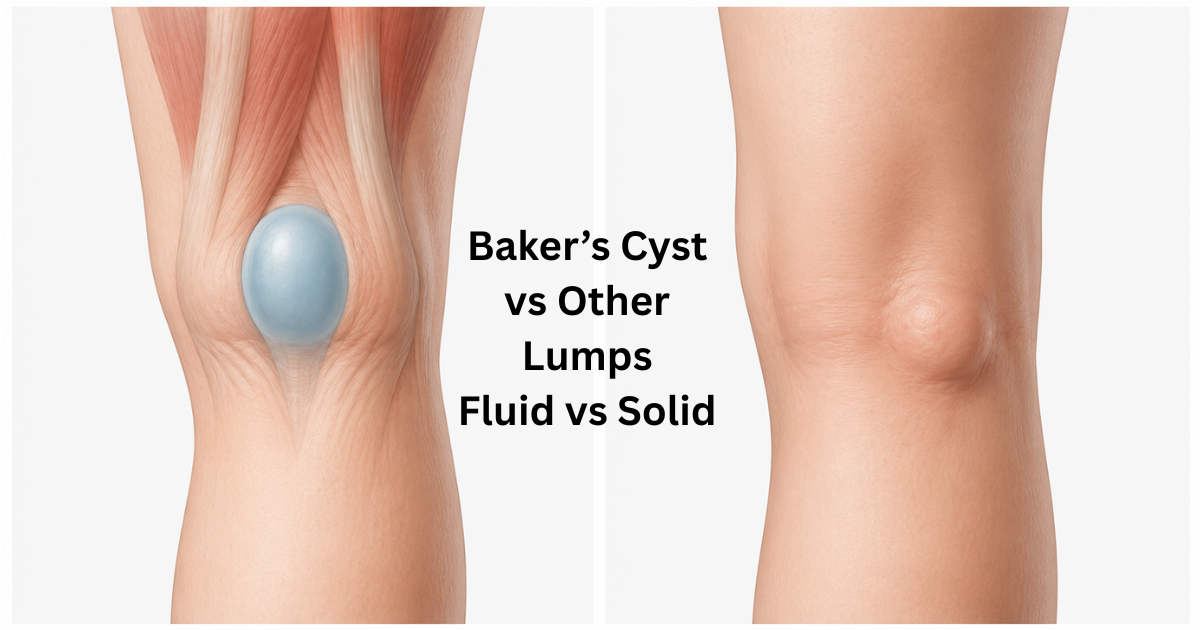
A Baker’s cyst is a fluid-filled sac that forms behind the knee due to excess joint fluid. Many people confuse it with other types of lumps. A lump behind knee not baker’s cyst, is different because it is usually solid, firmer, or may arise from other tissues like fat, muscle, or blood vessels. Baker’s cysts are often linked with knee arthritis or injury, causing swelling, stiffness, or tightness behind the knee.
Unlike other lumps, Baker’s cysts are soft, compressible, and may change size depending on joint activity. If your lump is hard, painful, or rapidly growing, it is unlikely to be a Baker’s cyst and should be investigated further. Understanding this difference is important because it guides the proper diagnosis and management.
Many people also confuse popliteal fossa lumps or knee mass differential diagnosis with Baker’s cysts, so careful evaluation is essential.
| Feature | Baker’s Cyst | Lump Behind Knee Not Baker’s Cyst |
| Structure | Fluid-filled sac | Fat, muscle, tendon, blood vessel, bone, or tumor |
| Feel | Soft and compressible | Soft, firm, or hard |
| Size | May change with activity | Usually remains the same or slowly grows |
| Pain | Mild stiffness | Depends on the cause |
| Treatment | Often conservative | Depends on diagnosis |
Why Your lump behind knee not baker’s cyst
A lump behind knee not Baker’s cyst can develop for many different reasons. While Baker’s cysts are fluid-filled and often linked to arthritis or knee injuries, other lumps may arise from fat, muscles, tendons, blood vessels, lymph nodes, or bone. Some are harmless and grow slowly, while others may require prompt medical attention.
Certain warning signs suggest the lump may not be a Baker’s cyst, including a hard or fixed mass, rapid growth, severe pain, redness, warmth, or a pulsating sensation. Because these symptoms can be associated with more serious conditions, a proper medical evaluation is essential before starting any treatment. For more trusted medical information about Baker’s cyst, you can explore the resources available on Mayo Clinic before discussing treatment options with your healthcare provider.
Common Causes of a Lump Behind Knee Not Baker’s Cyst
Many conditions can cause a lump behind knee not baker’s cyst and it is important to identify the underlying reason.
Common causes include lipomas, ganglion cysts behind the knee, hamstring tendon lumps, soft tissue tumors of the knee, swollen lymph nodes behind the knee, muscle herniation of the knee, and vascular issues like popliteal artery aneurysm symptoms.
Each of these causes has distinct characteristics: some are soft and movable like lipomas, while others may be firm, painful, or even pulsating, indicating vascular involvement.

1. Lipomas – Benign Fatty Lumps
A lipoma is a soft, slow-growing lump made up of fat cells. It is one of the most common non-cancerous causes of a lump behind knee not Baker’s cyst and is usually painless unless it presses on nearby nerves or tissues.
Symptoms
- Soft and movable lump
- Slow growth over time
- Usually painless
- May cause discomfort if it becomes large
Diagnosis
Doctors usually diagnose a lipoma through a physical examination. An ultrasound or MRI may be recommended to confirm that the lump is made of fatty tissue and is not another type of growth.
Treatment
Most lipomas do not require treatment. However, surgical removal may be recommended if the lump becomes painful, grows larger, or affects knee movement.
2. Soft Tissue Tumors
Soft tissue tumors can be benign or malignant (cancerous). Although rare, they should always be evaluated because early diagnosis is important.
Symptoms
- Firm or hard lump
- Rapid increase in size
- Pain or tenderness
- Numbness if nearby nerves are affected
Diagnosis
Doctors may perform an MRI, X-ray, or biopsy to determine whether the tumor is benign or malignant.
Treatment
Treatment depends on the diagnosis and may include surgery, chemotherapy, radiotherapy, or regular monitoring for benign tumors.
3. Ganglion Cysts
Ganglion cysts are fluid-filled sacs that develop near joints or tendons. They are different from Baker’s cysts because they usually arise from tendon sheaths rather than the knee joint itself.
Symptoms
- Small, smooth lump
- Mild pain or discomfort
- Swelling that may become more noticeable during activity
- Limited movement in some cases
Diagnosis
Ultrasound or MRI helps confirm that the lump is a fluid-filled ganglion cyst rather than a solid mass.
Treatment
Small ganglion cysts may disappear without treatment. If symptoms persist, doctors may recommend aspiration or surgical removal.
4. Vascular Causes
Blood vessel problems behind the knee can sometimes appear as a lump and may require urgent medical treatment.
Deep Vein Thrombosis (DVT)
Symptoms
- Painful swelling
- Warmth and redness
- Tenderness in the calf or behind the knee
Diagnosis
A Doppler ultrasound is the standard test used to detect a blood clot.
Treatment
Treatment usually involves blood-thinning medications to prevent serious complications such as pulmonary embolism. You can also explore this detailed resource from the Cleveland Clinic to understand DVT symptoms, causes, and treatment.
Popliteal Artery Aneurysm
Symptoms
- Pulsating lump behind the knee
- Leg pain or cramping
- Cold or numb foot in severe cases
Diagnosis
Doctors usually confirm the condition with a Doppler ultrasound, CT angiography, or MRI.
Treatment
Treatment may require vascular surgery or a minimally invasive procedure to restore normal blood flow.
5. Tendon and Muscle-Related Lumps
Injuries, tendon thickening, or muscle herniation can create a lump behind the knee, especially in physically active individuals.
Symptoms
- Firm lump
- Pain during movement
- Swelling after exercise
- Tightness behind the knee
Diagnosis
Physical examination and MRI help identify tendon injuries or muscle abnormalities.
Treatment
Rest, physiotherapy, stretching exercises, and anti-inflammatory medication are commonly recommended.
6. Swollen Lymph Nodes
Lymph nodes behind the knee may become enlarged because of infection, inflammation, or, less commonly, cancer.
Symptoms
- Small, movable lump
- Tenderness
- Fever or signs of infection in some cases
Diagnosis
Doctors may recommend blood tests, ultrasound, or a biopsy if the swelling persists.
Treatment
Treatment depends on the underlying cause and may include antibiotics, anti-inflammatory medication, or further investigation if cancer is suspected.
7. Bone Abnormalities and Spurs
Bone spurs or growths such as osteochondromas, can sometimes be felt as hard lumps behind the knee.
Symptoms
- Hard, fixed lump
- Pain during movement
- Reduced knee flexibility
Diagnosis
X-rays are usually sufficient to identify bone spurs, while CT scans or MRI scans may be needed in some cases.
Treatment
Mild cases may only require observation and pain relief, while larger or painful growths may need surgical removal. If you’re looking for more health-related guides and expert insights, US Trendings offers additional articles covering a wide range of medical and wellness topics.
8. Infections or Abscesses
An infection behind the knee can cause an abscess, leading to a painful lump.
Symptoms
- Redness and warmth
- Severe pain
- Fever
- Swelling filled with pus
Diagnosis
Doctors diagnose an abscess through a physical examination and may use an ultrasound if needed.
Treatment
Treatment usually includes antibiotics and drainage of the abscess.
9. Inflammatory Conditions (Gout or Rheumatoid Nodules)
Inflammatory diseases can sometimes produce firm nodules around the knee.
Symptoms
- Firm nodules
- Joint pain
- Swelling and stiffness
- Redness during flare-ups
Diagnosis
Blood tests, joint examination, and imaging help identify inflammatory conditions.
Treatment
Treatment focuses on controlling inflammation with medications, lifestyle changes, and long-term management of the underlying disease. The American Academy of Orthopaedic Surgeons (AAOS) provides additional information about knee conditions, diagnosis, and treatment options.
Step-by-Step Guide to Evaluating Your Lumps
Step 1 – Observe Your Symptoms
Carefully monitor your lump behind knee not baker’s cyst, noting size, pain, color, and tenderness. Track changes over time to provide accurate information to your doctor.
Step 2 – Physical Examination
A doctor will assess mobility, firmness, and pulsation. Solid lumps, fixed masses, or rapidly growing lumps indicate more serious causes like soft tissue tumors knee or popliteal artery aneurysm symptoms.
Step 3 – Imaging Tests
Ultrasound helps distinguish fluid-filled cysts from solid lumps. MRI provides detailed images of muscles, tendons, and tumors. X-rays can detect bone spurs or growths.
Step 4 – Laboratory Tests (If Needed)
Blood tests may identify infections, inflammation, or gout-related urate crystals. A biopsy may be necessary for suspicious solid tumors.
When to Seek Immediate Medical Attention
| Symptom | Possible Meaning |
| Rapidly growing lump | Tumor or another serious condition |
| Red, warm, or painful lump | Infection or deep vein thrombosis (DVT) |
| Pulsating lump | Popliteal artery aneurysm |
| Numbness or tingling | Possible nerve compression |
| Severe swelling | Requires urgent medical evaluation |

Treatment Options Based on Cause
| Cause | Treatment |
| Lipoma | Observation or surgical removal if needed |
| Ganglion cyst | Aspiration or surgery |
| Tendon injury | Rest, physiotherapy, and anti-inflammatory medication |
| Infection | Antibiotics and drainage if necessary |
| Deep vein thrombosis (DVT) | Blood-thinning medication |
| Soft tissue tumor | Surgery, chemotherapy, or radiotherapy, depending on the diagnosis |
The most appropriate treatment depends on the underlying cause and should always be guided by a healthcare professional.
Prevention and Self-Care Tips
✔ Maintain a healthy weight.
✔ Strengthen the muscles around your knee.
✔ Stretch before and after exercise.
✔ Avoid repetitive knee injuries.
✔ Monitor any new or changing lump.
✔ Seek medical advice if symptoms worsen.
FAQs
1: What does a lump behind knee not baker’s cyst, usually feel like?
A lump behind knee not baker’s cyst can feel different depending on its cause. It may be soft and movable (lipoma), firm and fixed (tumor), or pulsating (vascular issue). Pain, redness, or warmth may suggest infection or DVT. Unlike Baker’s cysts, these lumps often do not change size much and may grow slowly or quickly.
2: Can a lump behind the knee not be a cyst at all?
Yes. A lump behind knee not Baker’s cyst can come from fat, muscle, tendon, bone, lymph nodes, or blood vessels. Common causes include lipomas, ganglion cysts, tendon lumps, or rare tumors. Vascular problems like DVT or a popliteal artery aneurysm can also cause similar swelling.
3: What are the main causes of a lump behind knee not baker’s cyst?
Main causes include:
Lipomas, ganglion cysts, soft tissue tumors, tendon injuries, swollen lymph nodes, bone spurs, and vascular issues like DVT or popliteal artery aneurysm. Each cause has different symptoms and may need imaging for confirmation.
4: How can I tell if a lump behind the knee is serious?
It may be serious if the lump is hard, rapidly growing, painful, red, warm, or pulsating. Numbness, tingling, or sudden swelling can also be warning signs. These symptoms need urgent medical attention.
5: What tests do doctors use to diagnose it?
Doctors may use a physical exam, ultrasound, MRI, X-ray, Doppler ultrasound, blood tests, or biopsy. These tests help confirm if the lump is fluid-filled, solid, or related to blood vessels or infection.
6: Can a lump behind the knee cause pain?
Yes. Some lumps are painless (like lipomas), while others cause pain due to pressure on nerves or inflammation. Pain with redness or warmth may indicate infection or DVT.
7: How is it treated?
Treatment depends on the cause. It may include rest, physiotherapy, medication, aspiration, or surgery. Serious cases like DVT or tumors require specialized medical treatment.
8: Can lifestyle changes help prevent it?
Yes. Regular exercise, stretching, weight control, and avoiding knee injuries can reduce risk. Monitoring any new lump early is also important.
9: Are lumps behind the knee common?
Yes, they are fairly common in adults. Most are harmless like lipomas or cysts, but some may require medical evaluation, especially if they change or grow.
1o: When should I see a doctor?
See a doctor if the lump is growing, painful, hard, red, warm, or causes numbness. Even painless lumps should be checked if they persist or change over time.
11: Can exercise make a lump behind the knee worse?
Light exercise may be safe for some conditions, but strenuous activity can worsen pain or swelling depending on the underlying cause. Avoid intense exercise until your doctor confirms the diagnosis.
12: Can children develop a lump behind the knee?
Yes. Although less common than in adults, children can develop lump behind knee not baker’s cyst, injuries, infections, or other conditions. Any persistent or enlarging lump should be evaluated by a healthcare professional.
Conclusion
A lump behind knee not Baker’s cyst can have many different causes, ranging from harmless lipomas and ganglion cysts to more serious conditions such as deep vein thrombosis (DVT), popliteal artery aneurysms, or soft tissue tumors. While some lumps only require monitoring, others need prompt medical evaluation and treatment. If your lump is painful, rapidly growing, hard, or associated with redness, warmth, numbness, or swelling, do not ignore it. Early diagnosis through a physical examination and appropriate imaging tests helps ensure accurate treatment and reduces the risk of complications.
Seeking medical advice early can help identify the underlying cause and ensure the most appropriate treatment.
Medical Disclaimer:
This article is for educational purposes only and should not replace professional medical advice, diagnosis, or treatment. Always consult a qualified healthcare provider if you notice a lump behind your knee or experience concerning symptoms.