
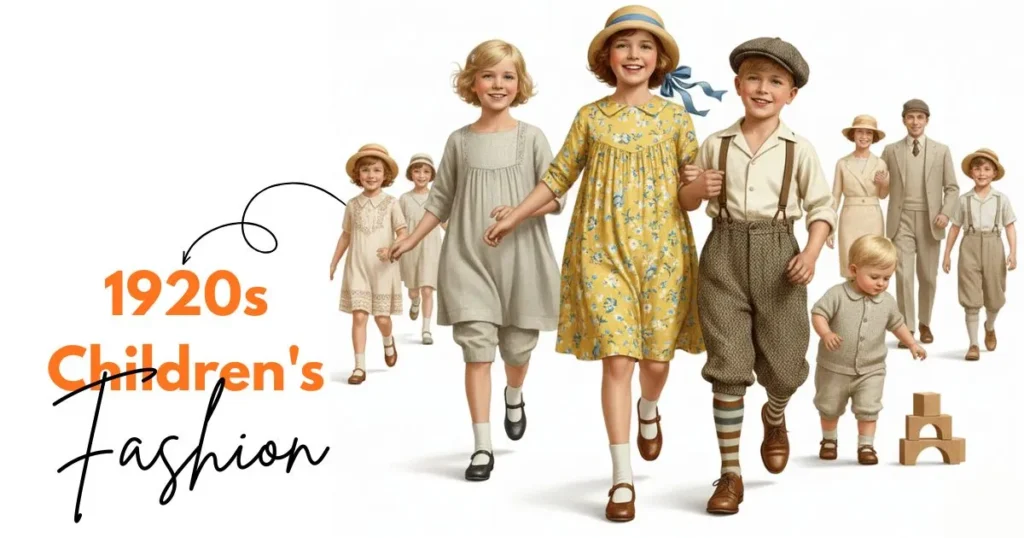
The 1920s were a revolutionary period in fashion for all ages, and even children’s wear was not an exception. The progressive spirit characterizes the decade; a new way of choosing children’s clothes was introduced. Days of hard, formal, and not always useful clothes were long gone, and the style of small children was more comfortable, convenient, and even entertaining. The article will talk about the 1920s Childrens Fashion and how this changed the way children were dressed and the outcome of this influenced the future fashions.
The Impact of the 1920s Childrens Fashion
The 1920s fashions were highly associated with freedom, comfort, and self-expression, which were driven by social changes. Such changes were manifested in the clothes of children, which were more convenient and casual. It was the time of dramatic discarding of strongly formal modes of dressing among the little ones.
As the social standards were broken in the early 20th century, so were the children’s wardrobes. It was also during this period that more casual and convenient kids’ clothes were developed, and their focus was on comfort in their movements rather than being formal. This was a direct reaction to the shift in the attitude towards childhood and how children should be provided to speak out.
The Key Features of 1920s Childrens Fashion
Among the most remarkable developments in children’s fashion during the 1920s was the shift to more comfortable and lightweight pieces of clothing. Girls’ dresses and boys’ suits were made lighter, shorter, and moved more easily. This enabled children to have greater freedom of play and exercise, and a less stressful attitude towards childhood.
Dresses were common among girls; they were knee-length, their waistlines were lowered, and they were cut straight and simple. The knickerbockers worn by boys were loose pants, but were brought together at the knee, and were usually worn with a blazer or a plain shirt unbuttoned at the neck. Such designs were not as tight as the garments of past decades, which implied the increased significance of comfort in the fashion of children.
Fabrics of the 1920s for Kids’ Clothing
The materials of the fabrication of 1920s Childrens Fashion were a sharp contrast to the heavy and restricting materials of the past. Light breathable materials such as cotton, linen, and soft wool came into use in clothing among children during this era. These fabrics gave it comfort and ease and this was necessary with a generation of children who were busier than ever.
During the warmer weather, cotton and linen could be used, and children would cool down playing in the open air. The colder weather necessitated the use of soft wool clothes in the suits and jackets of the boys. These garments were comfortable and they also represented the more casual nature of fashion in the 1920s.
The Evolution of Girls’ Fashion in the 1920s
Some of the most radically changed clothing was the girls’ clothing in the 1920s kids’ fashion. Adult flapper styles were popularized and filtered down to the children’s styles. Dresses were produced to be shorter, usually just above the knee and the waist line was dropped, giving it an easy movement and a sense of freedom to the girls.
Girls also had accessories as a major part of their wardrobe during this period. Young girls also wore cloche hats, which were the mainstay of women’s fashion. These hats were frequently tied around with ribbons or small feathers and this completed the effect on the girls, making them look sophisticated and fashionable.
The Transformation of Boys’ Fashion in the 1920s
Similar development happened with the fashion of males in the 1920s, but it was not as flamboyant as the styles of girls. Knickerbockers that had previously been worn by adults were now worn by boys, usually with knee-high socks and a flat cap. These suits were either woolen, tweed, or any other strong material and this meant that they could be comfortable as well as durable.
More relaxed everyday boy clothes were also introduced in the 1920s. They were still required to wear suits on special occasions, but regular everyday wear included; button up shirt, short pants, and knee-length socks to enable them have much freedom and comfort in their everyday life activities.
Accessories and Footwear in the 1920s Childrens Fashion
The 1920s Childrens Fashion also had accessories, such as hats and shoes, which were worn by the boys and girls and paired up with the clothes. Cloch hats could not be done without by girls. These close-cropped heads were circular and low-tipped on the forehead, and a trendy affectation to their young suits.
The accessories of boys were in the form of flat caps, which were usually worn at a tilt and they gave a boyish effect to the outfits. Girls’ shoes were usually Mary Janes, with a strap at the top of the foot, and those of boys were strong leather shoes, ideal in the outside sport. These supplements made up the appearance and helped to add to the trendy but workable wardrobe decisions of the era.
The Rise of Gender Neutrality in Children’s Clothing
The inception of gender-neutral clothes was one of the minor but significant elements of 1920s children’s clothes. Although there was a constant style between girls and boys, a shift was being taken towards clothing that could be worn by both sexes. This was especially evident in the daily clothing where the boys used to be dressed in simple tunics and the girls could be dressed more casually.
This trend of making clothing more gender-neutral was the basis of similar freedom for more flexible garments in the future. It was a quiet revolution against the traditionally strict gender patterns of the past years, giving children greater liberties in the way they express themselves through their way of dressing.
The Influence of the 1920s on Family Fashion
The fashion of the 1920s, like Gatsby, did not just take changes to the kids. The fashion in the family during this period also experienced a change to simpler and more casual fashion. The notion of comfort and ease was adopted by parents, especially mothers and their impact on the dressing styles of children was evident.
In family photo albums dated to the 1920s, the parents and children tend to be shown in coordinating outfits. As children were dressed in the more casual, fun style, parents were also adopting the direction of simplicity and utility; the family wardrobe overall was becoming more welcoming and not so stuffy.
Social Class and Its Influence on Children’s Fashion
The style and quality of children’s fashion of 1920s were greatly influenced by social class. The larger families were able to afford better fabrics and custom-made clothes where middle and working classes were required to use the cheaper and more conveniently made clothes. This formed a clear gap in the fashion offered to children, although the fundamental trends were not very different in all social groups.
In the case of the upper class, the kids were usually dressed in more detail, including lace, embroidery, and other more expensive fabrics like silk. The clothing of middle-class children was usually of cotton or wool, and that of working-class children was of simpler and more mass-produced versions of the styles so popular, and in many cases, they had to content themselves with hand-me-downs.
The Enduring Legacy of 1920s Childrens Fashion
1920s Childrens Fashion provided the basis of most of the styles that were to be adapted during the following decades. The trend toward comfort and practicality and the making of more playful and accessible designs had a significant impact on the fashion decisions of the future generation.
In the contemporary world, children can also be observed to have some echoes of the trends in the 1920s in their fashion. The loose, casual style of clothes that was trending throughout the decade still influences the way children wear them and most of the contemporary clothes have been revolving around movement, comfort and simplicity. The heritage of the 1920s is being used by designers to create a reference point in terms of providing utility with beauty to the children in their wardrobes.
FAQ’s
What were the impacts of the 1920s on the clothing of children?
In the 1920s, children got more relaxed and practical clothes. Girls wore shorter dresses and boys wore less restrictive suits, which reflected a change to comfort and freedom.
Which kinds of children’s clothes were popular in the 1920s?
The fabrics used in children’s clothing in the 1920s included cotton, linen and soft wool. The materials were comfortable and easy to move around, which was suitable for active children.
Were accessories part of the fashion of children in the 1920s?
Yes, accessories were very important. Girls had cloche hats and headbands and boys tended to wear a flat cap. Girls wore shoes featuring Mary Janes and boys had leather shoes.
What was the influence of social class on the fashion of children during the 1920s?
More expensive fabrics and custom-made clothes were available to wealthier families, and cheaper, mass-produced clothes were worn by the middle and working-class children. Nonetheless, the overall tendencies were alike in all the social classes.
What was the impact of the 1920s Childrens Fashion on the subsequent fashions?
The design trends and gender-neutral designs of the 1920s formed the basis of the future generation with their comfort-oriented designs. The fashion of this decade has still been used in contemporary kids’ clothing with the emphasis on freedom of movement and practicality.
Conclusion
In conclusion, the 1920s Childrens Fashion was a revolution of comfort, practicality, and expressing oneself. The era introduced more light and comfortable clothes, which allowed children freedom to move around and also left them with a carefree life. The popular dresses of the girls in the 1920s, knickerbockers of boys, etc., were the foundations of the fashion of the current children and had some influence on the style preferences in the future.