
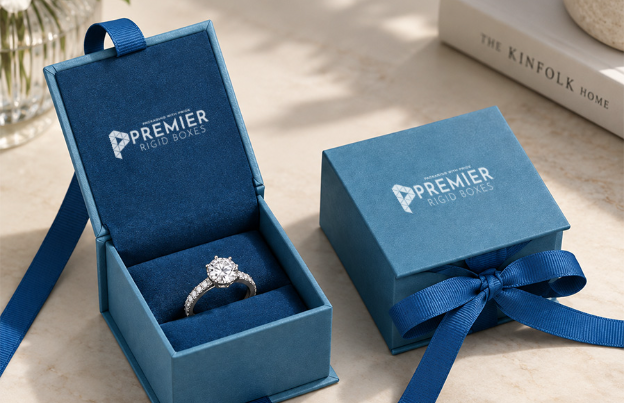
Rings are small enough that people assume they’re easy to ship safely, and that assumption causes more damage than almost anything else in jewelry packaging. A ring doesn’t need much room, so it’s tempting to toss it into whatever box is handy and call it done. But rings are also one of the more delicate jewelry categories to ship – prongs bend, stones loosen, plating scratches, and a ring that shifts even slightly inside a box can end up damaged in ways that aren’t always obvious until a customer’s already unboxed it. Figuring out exactly where that damage tends to happen is the first step toward actually preventing it.
The Risks of Underestimating Small Product Packaging
A lot of jewelry sellers underestimate how much movement happens inside a box during shipping, even a well-padded one. Packages get flipped, stacked, dropped a few inches onto a conveyor belt, and tossed into delivery trucks alongside heavier items. A ring with even a small amount of wiggle room inside its packaging will move during all of that, and repeated small impacts add up over a multi-day shipping journey.
This is where a lot of the damage actually originates – not from one dramatic drop, but from constant small movements that gradually loosen stones, bend prongs, or scuff a finish against the inside of a box that wasn’t built to hold the ring snugly in place.
Where Damage Typically Shows Up
Ring damage during shipping tends to cluster around a few predictable spots, and knowing where to look helps identify weak points in a packaging setup before they cause real problems.
Prongs and settings. Prongs holding a stone in place are often the most fragile part of a ring, and they’re especially vulnerable if the ring can shift or roll inside its packaging. Repeated small impacts against a box wall or insert can gradually bend a prong out of position, sometimes loosening the stone enough for it to fall out entirely.
Plated or finished surfaces. Rings with gold plating, rhodium finishes, or other coatings are prone to scratching if they come into contact with abrasive surfaces during transit, including rough packaging materials or even other jewelry pieces packed too close together.
Stone settings under pressure. Pave settings and clusters of smaller stones are particularly vulnerable to pressure damage if a ring gets compressed inside packaging that isn’t rigid enough to resist outside force.
Band deformation. Softer metals or thinner bands can bend slightly under pressure if a ring gets squeezed inside packaging that isn’t holding its shape properly, especially when multiple rings are packed together without individual separation.
Common Packaging Mistakes That Lead to Damage
A handful of recurring mistakes show up in ring packaging, and most of them are avoidable with a bit more attention to the actual insert design rather than just the outer box.
- Using an insert slot sized for a general ring rather than the specific ring’s actual dimensions
- Packing multiple rings loosely in the same compartment without separation
- Relying on soft tissue paper alone instead of a fitted foam or velvet insert
- Choosing a flimsy outer box that can bend or compress under stacked weight
- Skipping interior padding entirely for “small item” shipments, assuming size alone equals safety
Comparing Ring Packaging Approaches
| Packaging Approach | Protection Level | Cost | Common Failure Point |
| Tissue paper only | Low | Very low | Prong bending, stone loosening |
| Generic foam slot | Medium | Low-medium | Loose fit allows movement |
| Fitted velvet ring box | High | Medium | Minimal, if sized correctly |
| Custom molded insert | Very high | Medium-high | Rare, mostly outer box failure |
Why Custom-Fitted Inserts Make the Biggest Difference
The single biggest factor separating a ring that arrives perfect from one that arrives damaged is usually the fit of the interior insert. A ring sitting in a slot sized specifically for its band width and profile has almost no room to move, which eliminates most of the small, repeated impacts that cause prong bending and stone loosening in the first place.
This is a big part of why sellers moving beyond a handful of monthly orders often look into custom ring boxes bulk online USA suppliers, since ordering in volume makes it far more practical to get properly fitted inserts made for a specific ring style rather than relying on generic slots that technically fit several different ring shapes but don’t actually hold any of them securely.
Outer Box Rigidity Still Matters
A great interior insert doesn’t do much good if the outer box collapses under the weight of other packages stacked on top of it during shipping. Rigid board construction resists that kind of compression far better than a thin folding carton, which matters more than people expect, given how often packages end up stacked several layers deep in a delivery vehicle or sorting facility.
For higher-value rings specifically, pairing a rigid outer box with a properly fitted interior insert covers both of the main failure points – outside compression and internal movement – rather than solving for just one and leaving the other exposed.
Final Words
Most ring damage during shipping isn’t caused by one obvious mistake – it’s the result of small, repeated movements that a poorly fitted box or insert allows to happen over and over throughout a shipping journey. Getting the interior fit right, choosing a rigid outer box, and paying attention to where damage typically originates make a real difference in how a ring actually arrives. For sellers shipping rings regularly, that kind of attention to packaging isn’t an extra step. It’s usually the difference between a customer opening a perfect piece and one that needs to go straight back for repair.
FAQ
Is a ring really at risk of damage during a short shipping trip? Yes. Damage usually comes from repeated small movements and impacts rather than a single dramatic event, and even a short shipping window involves enough handling to cause gradual wear if the ring isn’t held securely in place.
Can tissue paper alone protect a ring during shipping? Not reliably. Tissue paper doesn’t hold a ring in a fixed position, allowing movement inside the box and increasing the risk of prong bending or stone loosening during shipping.
What’s the most vulnerable part of a ring during shipping? Prongs and stone settings are typically the most fragile points, especially on rings with raised or delicate settings that can catch or bend against packaging material.
Does ordering custom ring boxes in bulk actually save money? Usually, yes, especially for sellers who ship regularly. Bulk ordering tends to lower the per-unit cost of custom-fitted inserts significantly compared to smaller, one-off orders.
Is a soft velvet insert better than foam for protecting rings? Both work well when properly fitted. Velvet tends to look more premium and is gentler against plated finishes, while foam can offer slightly firmer structural support depending on the design.