
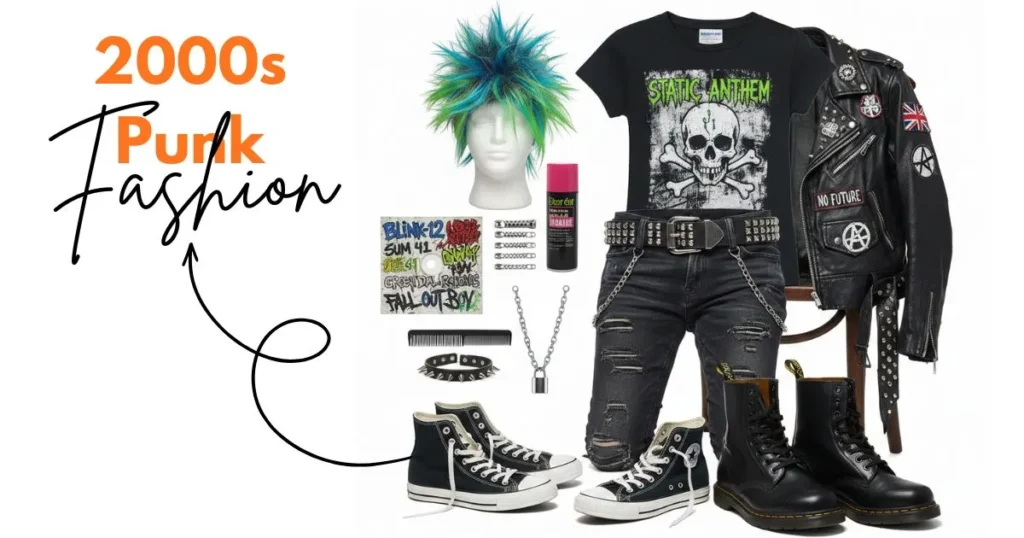
The punk movement of the 2000s is an enormous advancement of the initial punk movement. It was a borrowing of the anarchic, anti-establishment, rebellious culture, and it integrated the cultural modifications with a radical style. The 2000s became a decade of expressiveness, and the music and fashion industry was not an exception, as people demonstrated themselves with their clothes.
The 2000s punk fashion was both nostalgic and modern simultaneously, which made the fusion rather unique and applicable even today. In this paper, we will address the key features that defined the punk fashion style of the 2000s and its influence on mainstream culture, and why it continues to be popular.
The Rise of Pop-Punk and Punk Revival
The punk music bands, including Blink-182, Sum 41, and Green Day, gained popularity in the early years of the 21st century, and the punk fashion gained popularity again. Their mainstream success made punk fashion available to more people, way outside their underground base. It featured the look of graphic t-shirts, skinny jeans, and sparkly accessories.
Punk became popular in this revival. This home-made style of fashion that formed the foundation of punk was revived as individuals handcrafted their garments to express their character and hobbies. It was a great reverberation of the old punk culture, which came up in the 1980s as crass opposition to mainstream culture, fashion, and commerce. Punk style that was evolving in the 2000s was quickly taken on board as a youth-culture of freedom and self-identification.
Key Fashion Pieces of 2000s Punk Fashion
The punk style in the 2000s was marked by a number of influential works. The most common ones were band t-shirts, which represented the loyalty towards the favorite punk bands. These graphics and logo-covered shirts were paired with a pair of ripped jeans or cargo pants in order to complete the outfit.
Accessories were also greatly used during the punk fashion. Spike bracelets, chains, safety pins, and studded belts were frequently used to augment the edgy, rebel style. These accessories were custom-made, and individuals customised them to ensure they were unique and their outfits were unique to them.
Hairstyles and Hair Color in 2000s Punk Fashion
Hair styles were considered essential in the 2000s Punk Fashion. The spiked hair, the mohawk and the colored streaks became synonymous with the time. Neon pink, electric blue and green were some of the bright colors that many punks adopted to display their uniqueness.
Dramatic styles could be used due to the use of strong hair products such as gel and mousse, which could be held all day long. Such provocative appearances became synonymous with the punk culture and provided a visual means of self-expression of rebellion and defiance against society.
The Influence of Emo and Pop-Punk
In the late 2000s, the emo culture started to intertwine with the punk fashion to give rise to a subgenre. The emo fashion of the 2000s introduced the darker colors, such as black skinnies and band hoodies. The fashion was in line with the melancholic and introspective sound of emo bands such as My Chemical Romance and Fall Out Boy.
The effect of pop-punk was still prevalent, yet emo provided an element of emotional vulnerability to the punk fashion. The contrast between punk rebellion and emo feelings was a complicated and multifaceted style that could attract a variety of viewers.
Punk Fashion for Everyone: Gender Inclusivity
The exclusivity of punk fashion was one of the major peculiarities of the 2000s. The punk fashion was not gender specific. The rise of the 2000s men’s fashion blurred gender lines, as men and women embraced identical styles. This unisex appeal has meant that this greater expression was possible and this created a feeling of community within the punk scene.
Punk fashion was no longer bound by the gender norms with band t-shirts and studded accessories. The androgynous character of punk fashion was transferred into the form of the means through which people could express themselves without being restricted by the norms of masculinity and femininity in society.
DIY Culture and Customization
2000s Punk Fashion was based on DIY culture. Several punks combined their clothes and personalized them with the use of studs, patches, and embroidery. This practical method of fashion made the style very personalized and not one fashion in the whole outlooked exactly like the other.
Thrift stores were one of the main sources to create something unique. Punk fashion did not simply consist of buying costly products but was rather about making something that had a meaning to one, which helps to develop the anti-consumerist ethos of the punk subculture.
Punk Footwear: Converse and Doc Martens
Shoes turned out to be a most significant aspect of 2000s Punk Fashion. Punk culture was linked with Converse sneakers, and the Chuck Taylor model in particular. They formed a component of the appearance since they were easy in fashion and were comfortable and versatile.
Converse and Doc Martens boots were also iconic besides Converse. They were associated with the punk style because they were known to be durable as well as being edgy and worn with torn tights or skinny jeans. Such boots were a rebellious element to any punk style.
The Legacy of Punk Fashion in Mainstream Culture
The effects of punk fashion of the 2000s were considerably more substantial than the punk subculture. The style became mainstream with time, both literally in form, such as thin jeans, leather jackets, band tees, etc. Even the top designers began to incorporate punk-related objects in their designs.
Celebrities like Billie Eilish and Olivia Rodrigo are regenerating the elements of punk fashion. Their ability to incorporate punk influence into their original styles is evidence that punk fashion continues to play a major role in culture, even in the 2020s.
Fashion as a Symbol of Rebellion and Identity
The basis of 2000s fashion was an identity and rebellion statement. It was one of the ways for young people to express their dissatisfaction with the norms and establishment of society. It was not only clothes, but the style was a visual display of rebellion and anti-conformity.
Punk fashion was also closely associated with music and they were hand in glove to send out a message of rebellion. To most, putting on clothes that resembled the punk style was a demonstration that they were not content with the state of things and they wanted something different.
The Return of Punk in 2020s Fashion
Punk fashion has been revived in the past few years. The Y2K fashion, especially for men’s has revived most of the aspects of the 2000s, such as punk-inspired accessories and fashion. The fashion icons and street style influencers have adopted this bad-boy style, which proves that punk is not dead.
The 2020s have witnessed a combination of punk with other fashions, including grunge, goth, and even high-end fashion. The further mixing of these aspects demonstrates that punk fashion is developing, but it continues to be a strong force in the fashion world.
Punk Fashion and Social Movements
Social and political movements have always been associated with punk fashion in history. 2000s Punk Fashion also remained an instrument of social commentary. Both bands and fans took fashion as a way of protesting against the problems of corporate greed, inequality, and environmental destruction.
Punk has always been characterized by activism and its clothes tend to mirror these ideas. People began to identify with causes that they believed in publicly by wearing band t-shirts, DIY garments and accessories.
Punk Fashion in the Digital Age
The advent of the internet and social media has enabled punk fashion to reach new heights of spread as never before. There is a platform, such as Instagram and TikTok, that has provided an arena where influencers and fashion followers can express their version of punk style. These online platforms have given a new life to punk fashion, enabling it to be accessible to a global audience.
Punk shopping has also become easy, as people have access to online shopping. Punk-inspired clothing and other accessories are now easily sold by brands under the initiative of creating an appearance, so people do not need to turn to thrift stores or self-made techniques.
FAQ’s
What does 2000s Punk Fashion mean?
The 2000s Punk Fashion was notable in that the punk style was brought back into the mainstream. It incorporated classic punk styles and a contemporary approach, which made fashion more individual and more expressive.
What role did punk fashion play in the mainstream culture of the 2000s?
Punk fashion has had an impact on mainstream culture because of the popularity of punk fashion along with skinny jeans, leather jackets and band tees. These factors got integrated into high fashion and street style.
What was so significant about DIY culture in punk fashion in the 2000s?
The significance of DIY culture was that it enabled people to tailor their own clothes and thus make their own outfits unique. It represented the anti-consumerist ideals of punk and promoted fashion innovation.
Are the punk clothes of the 2000s still applicable today?
Punk fashion of the 2000s is still at the point, yes. It has been rediscovered in the trend of Y2K and has remained a part of fashion to date, particularly in street style and the wardrobe of celebrities.
How did music influence the punk fashion of the 2000s?
In punk fashion of the 2000s, music was employed as a major point of reference. Punk and pop-punk groups played with the fashion preferences of their audience, with clothing being a form of expression of musical and cultural identity.
Conclusion
In conclusion, 2000s Punk Fashion was a very bold and rebellious trend that embraced both the traditional punk fashion and the modern trends. It grew out as a symbol of individualism, innovation and rebellion that left a long-lasting imprint on fashion and the youth culture. It is still shaping trends nowadays and it is showing that the ethos of self-expression and defiance of punk will never go out of date.