
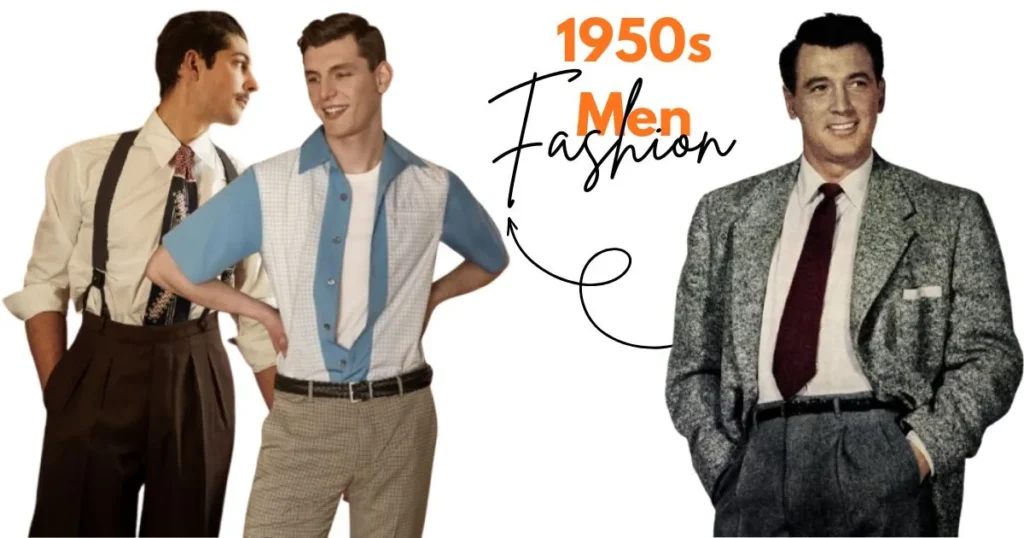
The era of 1950s men fashion is considered one of the most powerful in the history of fashion. It was elegant, easy-going, and rebellious, and it made its mark on the fashion of men. The decade also left its imprint on tailored suits to casual wear on the weekend, which is still appreciated to date.
This was a period of post-war optimism wherein men resorted to fashion as a way of self-expression. Fashion items were a combination of elegant and cozy, which defined the tradition of modern menswear.
The Rise of the Classic Suit in 1950s Men Fashion
In men’s fashion, tailored suits were the main feature of the 1950s, which was associated with professionalism and elegance. Structured shoulder jackets with small lapels developed smooth shapes for men who were both young and old.
Trousers were also slimmer and cuffed at the bottom, which matched the dress and polished shoes. Smaller details, such as pocket squares and skinny ties, completed the look and were accessories to it.
Casual Wear for Everyday Life
Casual fashion for men developed rapidly in the 1950s. Knitted sweaters, polo shirts, and rolled-up chinos were usual things to wear during the weekend and social gatherings.
These casual fashions were an indication of the change from stiff war clothes. Men were able to be comfortable and also look fashionable, and this started the era of versatile casual wear.
The Rebel Look: Leather Jackets and Denim
Leather jackets became a sign of revolution and the young generation. They wore jeans and boots, thus marking the departure of conservative clothing.
This stylish look gained widespread popularity with such icons as James Dean and Marlon Brando. It encouraged generations of young men to live up to an image of bold independence via fashion.
Popular Footwear Trends
The footwear during the 1950s was fashionable and practical. Loafers and Oxford shoes were preferred in a formal event, which were perfectly polished.
Men in casuals wore saddle shoes or fashionable sneakers. Shoes were used to complete any outfit, with the focus on detail and personal style.
Hats and Accessories
Even accessories were a hint but essential to 1950s Men Fashion. Fedora hats, skinny ties, and wrist watches gave individuality to the clothes and were not blingy.
Belts and pocket squares were taken very seriously to match the suits. These little details were indicators of the time with its focus on the elegant manner.
Influence of Hollywood Icons
Hollywood contributed significantly to the development of men’s fashion in the 1950s. Cary Grant and Marlon Brando stars displayed a blend of formal and informal outfits that were inspirational to the fans.
The idea of cinematic fashion was that clothing could be a manifestation of identity. Men used the screen to be directed as far as style, grooming, and attitude were concerned.
Haircuts and Grooming Trends
Hairstyles formed a necessary part of the 1950s Men Fashion. Formal and casual circles were using the pompadours, slicked back hair, and crew cuts.
There was grooming, which was meticulous, and it accentuated tailored suits or leather jackets. The clothing itself was as secondary as the appearance, which is maintained well.
Influence of Music on 1950s Men Fashion
The music celebrity who impacted the fashion of American men in the 1950s was Elvis Presley, among others. His casual shirts, cuff jeans, and smooth hair were his new style of cool.
Youngsters and adolescents imitate these designs, combining comfort with the sense of style. Fashion that was brought about by music brought individuality to daily clothing.
Summer and Beachwear Trends
Even the informal clothes of summer included a 1950s style. The warm weather was characterized by short shirts, light pants, and light loafers.
Bright designs and light hues were indicative of hope and relaxation. Beachwear was not only practical but stylish, and this had some impact on the trends of future seasons.
Sports and Athletic Wear
The sportswear became a part of daily fashion. Polo shirts, casual jackets, clean sneakers, and such like clothing allowed men to be active and fashionable.
This tendency marked the enhanced value of functionality without losing the looks. Sporting fashion gained popularity in leisure clothing.
The Evolution of Outerwear
There was no complete 1950s outfit without coats and jackets. The coats were overcoats, trench coats, and leather jackets, which made them versatile and sophisticated.
Outerwear was a style that was not only practical but also style-wise suited to all occasions. The layering became one of the elements of the decade’s fashion.
Patterns and Colors
The style of men in the 1950s was minimalistic and clean. Suit and casual wear were dominated by pinstripes, checks, and dull plaids.
Colors used were between classic greys and blues, and brighter colors in summer dresses. Patterns and colors were used selectively, thus making the outfits worn by men elegant.
The Impact of Post-War Economy
The boom of post-war economics had an impact on the fashion of men. Men were able to buy better suits and casual clothes as a result of increased disposable income.
The retailers and designers countered this by providing fashionable choices at different prices. Fashion became available, and more men were in a position to engage in trends.
Regional Variations in Fashion
Style was different, urban and rural. Tailored suits and polished shoes were common to city men, whereas casual and comfortable fashion was popular in the countryside.
Although it differs, the media and cinema impact provided a more coherent sense of fashion in different regions. The main aspects of 1950s men fashion were accepted by men everywhere.
Workwear and Professional Style
Dress code in offices was business-like. In most workplaces, suits, ties, and dress shoes have been required due to societal expectations of dressing.
Friday or weekend attire was minimal, so everyday work clothes formed a big portion of the wardrobe of a man. This was a formalist work fashion of the decade.
Fashion for Special Occasions
Extraordinary events demanded a stroke of genius. Tuxedos, cufflinks, and polished shoes showed grace and sophistication.
Even improvised parties were occasions where one could show personal style. The Men’s fashion in the 1950s was concerned with equilibrium: not being too sophisticated.
Enduring Legacy of 1950s Men Fashion
Most of the aspects of men’s fashion in the 1950s are still applicable today. Bespoke suits, leather jackets, and lighter things such as polo shirts still dominate men’s wear nowadays.
It was a decade of versatility, elegance, and casual coolness. Knowledge of its trends gives an idea about perennial style principles.
FAQ’s
What defined 1950s men fashion?
It was focused on custom suits, casual leisure, leather jackets, and understated accessories, which are elegant and rebellious.
What were the most influential fashion designers of the 1950s for men?
Hollywood actors such as James Dean, Marlon Brando, and Cary Grant influenced trends on a formal and casual basis.
What were the fashionable casual styles among men in the 1950s?
Casual wear consisted of: polo shirts, cardigans, cuffed chinos, leather jackets, and loafers.
What role did footwear play in the 1950s men’s fashion?
Footwear ranged from polished oxfords and loafers to saddle shoes and casual sneakers, completing outfits.
What is so special about the relevance of 1950s men fashion today?
Its emphasis on clean lines, customised fittings, and worn-out casual styles persistently drives contemporary menswear.
Conclusion
The era of 1950s Men Fashion was a wonderful mix of elegance, easy style, and youthful insubordination. It gave birth to modern men’s wear by designing suits, leather jackets, grooming, and accessories.
It is classic and therefore makes sure that such crucial elements do not go out of style. With the adoption of these traditional trends, modern men are able to add history and sophistication to their wardrobes today.