
There’s a very specific kind of silence that shows up in office life.
It’s not the quiet of “everyone is busy.” It’s the quiet that happens right after someone says, “So… I have an update.” And before they even finish the sentence, you already know what’s coming.
A resignation. A transfer. A relocation. A last day.
Suddenly, the person you’ve been casually seeing every morning—sharing coffee runs with, sending memes to during long meetings, rolling your eyes with during “quick syncs,” and quietly depending on when work feels heavy—has a calendar with an end date on it.
And then comes the part that hits more than most people admit:
You want to say something meaningful, but you don’t know how.
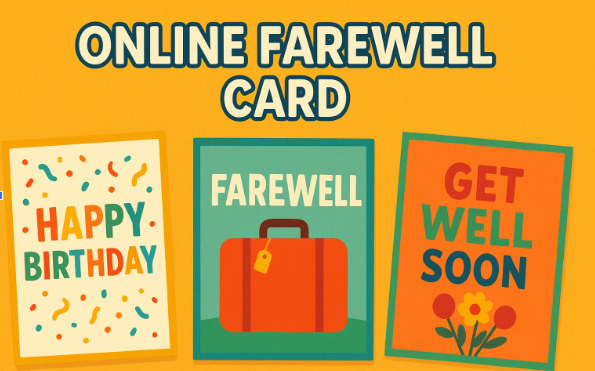
That’s exactly why a farewell card for coworker matters more than we give it credit for. It sounds small—just a card. But in corporate life, where emotions are often hidden behind professionalism, a farewell card becomes a rare space where people actually speak like humans again.
Not like job titles. Not like departments. Like people.
Why a farewell card feels bigger than “just a formality”
Let’s be honest: corporate goodbyes are weird.
One day, you’re debating deadlines and complaining about the printer. The next day, someone’s desk looks emptier, their Slack status turns permanently offline, and their name slowly stops showing up in meeting invites.
A farewell card does something important: it creates a moment where the relationship is acknowledged properly.
Because most coworker relationships aren’t just “work relationships.” They’re:
- The person who made Mondays tolerable
- The one who always explained things without making you feel dumb
- The teammate who covered for you when you were overwhelmed
- The friend who listened when life outside work got messy
- The colleague who made you feel like you belonged in that company
A thoughtful farewell card doesn’t need to be dramatic. It just needs to be real.
The problem: what do you even write?
If you’ve ever stared at a blank card thinking, “I don’t want to sound cringe,” you’re not alone.
Most people get stuck in one of these traps:
- Too formal: “Wishing you success in your future endeavors.” (Feels like HR wrote it.)
- Too short: “All the best!” (Not wrong, just… empty.)
- Too emotional: You want to write something deep, then panic and soften it into something safe.
- Too jokey: You make it funny but later wonder if you should’ve added something sincere.
The sweet spot is simple:
Write like you’re talking to them on a normal day—just with a little more honesty.
Here’s an easy structure that almost always works:
- A quick memory or truth
- A specific appreciation
- A warm send-off
Example (classic and heartfelt)
“Working with you genuinely made this place better. Thank you for always being patient, supportive, and calm—even on the chaotic days. You’ll be missed more than you know. Wishing you the best in your next chapter!”
Example (friendly and casual)
“I still can’t believe you’re leaving. Thanks for being the kind of coworker who made work feel lighter. You’re going to do amazing things—please don’t become too busy to say hi!”
Example (short but meaningful)
“Thank you for everything—your help, your kindness, and your energy. This won’t be the same without you. Wishing you the best always.”
That’s it. No poetry required. Just you being human.
What makes a farewell card actually memorable
A memorable farewell card for coworker isn’t the longest one. It’s the one that feels specific.
If you want your message to land, try adding one detail that only you would know:
- “I’ll miss our 10-minute ‘quick chats’ that turned into therapy sessions.”
- “Thanks for always being the first one to say ‘you got this’ before big presentations.”
- “I learned more from you than any onboarding document ever taught me.”
- “You made even the stressful projects feel manageable.”
When someone reads that, it stops being a generic goodbye. It becomes a real connection.
Group farewell cards: the easiest way to make everyone feel included
Now here’s where office reality shows up.
Sometimes you want to do something nice, but you’re also juggling 20 tasks, a meeting in 10 minutes, and a brain that’s running on caffeine. You still care—you just don’t have time for coordinating a physical card, chasing signatures, and praying someone remembers to bring it.
That’s why group cards work so well in corporate life. It’s not about being “lazy.” It’s about making the goodbye happen without stress.
A group farewell card:
- lets everyone contribute (even remote teams)
- prevents the awkward “I didn’t get a chance to sign” moment
- becomes a collection of memories, not just one note
- feels like a proper send-off without needing a big event
On Sendwishonline.com, you can create and share a digital group farewell card so teammates can add messages easily—especially useful when the office is hybrid, remote, or simply too busy to coordinate a physical card.
And honestly? The final card often becomes something the coworker reads more than once. Because it’s not one goodbye—it’s many.
What to write depending on the kind of coworker they were
Not every coworker relationship is the same. Here are message ideas that match different dynamics (without sounding forced):
If they were your work bestie
“I’m happy for you, but I’m also genuinely sad for me. You made every day easier and funnier. Promise we’ll keep in touch—work won’t be the same without you.”
If they mentored you
“Thank you for guiding me and having my back. You helped me grow in ways I’ll always remember. I’m carrying a lot of what you taught me into my next steps too.”
If you weren’t super close, but you respected them
“It’s been great working with you. I truly appreciate your professionalism, calm energy, and the way you always delivered. Wishing you success and happiness ahead.”
If they were the “glue” of the team
“You were the person who kept things moving and kept people together. Thank you for the support you gave so quietly and consistently. This team is lucky to have had you.”
If you want it light and funny (but still warm)
“Congrats on escaping! Don’t forget us when you’re thriving. Seriously though—thank you for everything. You’ll be missed.”
The little things that make your card feel “complete”
If you’re organizing the farewell card, here are a few small touches that make it feel extra thoughtful without being complicated:
- Add a one-line title at the top: “Good luck, [Name]!” or “We’ll miss you!”
- Encourage messages that include a memory or specific appreciation
- Include a few different tones: funny, heartfelt, short, long—it makes it feel real
- If possible, include one final line from the whole team:
“With gratitude, Team [X]”
And if you’re worried about it being too emotional: don’t.
People pretend they’re not sentimental at work, but a sincere farewell card is one of those things almost everyone secretly treasures.
Because it tells them, “You mattered here.”
The truth about corporate goodbyes
Work moves fast. People leave. Teams change. New faces appear. Old names fade from group chats.
But a farewell card slows things down for just a second—and says something that often doesn’t get said enough in corporate life:
Thank you. You mattered. I’m glad we worked together.
So if someone on your team is leaving, don’t overthink it. Write the message you’d want to receive. Keep it real. Keep it kind.
Because years later, most people won’t remember the project timelines.
FAQs: Farewell card for coworker
1) What should I write in a farewell card for a coworker if I don’t know them well?
Keep it simple and respectful: mention appreciation and good wishes. Example: “It was great working with you. Wishing you continued success and happiness in your next role!”
2) Should a farewell card be formal or casual?
Match your workplace culture and your relationship. Most farewell cards land best when they’re slightly casual and sincere—professional, but human.
3) Is it okay to be emotional in a coworker farewell card?
Yes. You don’t need to overshare, but it’s completely okay to say you’ll miss them, that they made work better, or that you appreciated them.
4) What’s a good short message for a farewell card?
“Thank you for everything. Wishing you the best in your next chapter!”
Or: “You’ll be missed—good luck and stay in touch!”
5) How do you organize a group farewell card easily?
Use a digital group card so teammates can contribute from anywhere, and you don’t have to chase signatures. Share one link, set a deadline, and compile it into one meaningful card.
6) When should you give the farewell card?
Ideally on their last day or at their farewell lunch/meeting. If the team is busy, the day before is also perfect—so it doesn’t get lost in last-day chaos.