
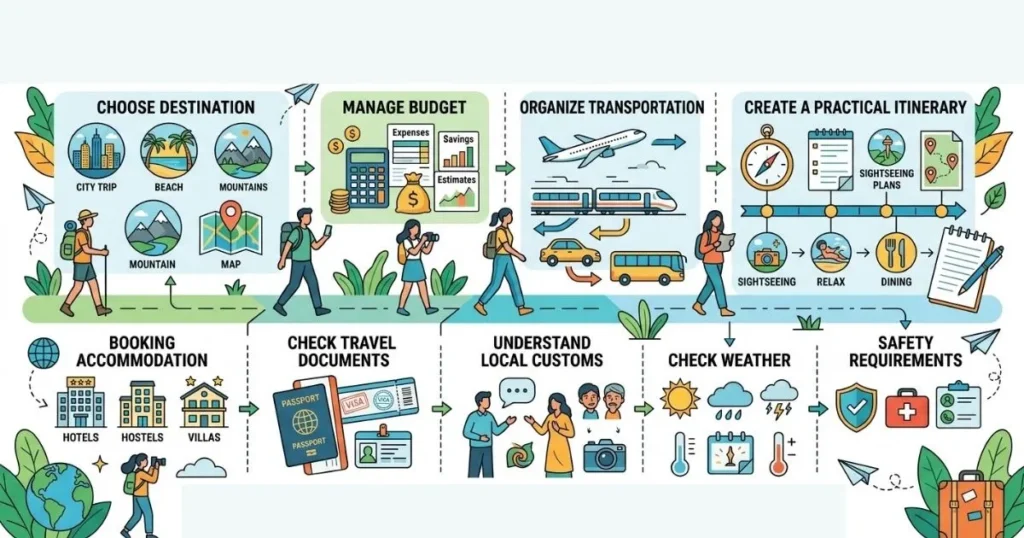
Planning a trip can turn an ordinary journey into a smooth and memorable adventure. Travel Planning helps you choose the right destination, manage your budget, organize transportation, and create a practical itinerary without unnecessary stress. Whether you’re preparing for a weekend escape, family holiday, solo adventure, or international vacation, thoughtful preparation makes every stage easier. From selecting suitable accommodation to checking travel documents, local customs, weather, and safety requirements, small details can make a big difference. A well-prepared travel itinerary also gives you flexibility to explore attractions while leaving time for relaxation. With the right travel tips, smart budgeting, and reliable trip preparation, you can enjoy a more confident and rewarding travel experience wherever you go.
Define Your Travel Planning Goals
Before choosing flights or hotels, think about what you want from the journey. Some travelers seek relaxation, while others prefer adventure, cultural experiences, nature, food, shopping, or historical exploration.
Your travel purpose will influence almost every other decision. A beach holiday may require a different schedule and budget than a hiking trip or a city-based cultural vacation.
Choose the Right Destination
Destination selection is one of the most important parts of preparing for a trip. Consider the weather, attractions, local culture, transportation network, safety conditions, and overall travel costs before making your choice.
Think about the experience you want rather than simply following popular destinations. A less crowded location can sometimes offer better value, authentic experiences, and a more relaxed atmosphere.
Decide the Best Time to Travel
Seasonality can significantly affect your travel experience. Research the destination’s peak season, shoulder season, and off-season to understand differences in weather, prices, crowds, and availability.
If your dates are flexible, traveling during the shoulder season can be particularly useful. You may find comfortable weather, fewer tourists, and better accommodation rates without sacrificing too much convenience.
Set a Realistic Travel Budget
A practical budget gives your trip a financial framework. Start by estimating major expenses such as transportation, accommodation, meals, sightseeing, activities, travel insurance, and local transportation.
Don’t forget smaller costs that can gradually increase your spending. Airport transfers, attraction fees, luggage charges, tips, mobile data, shopping, and emergency expenses should all have room in your budget.
Research Transportation Options
Transportation can determine how efficiently you explore a destination. Compare flights, trains, buses, rental cars, ferries, taxis, and public transportation according to your route and travel style.
For international travel, check baggage rules, airport transfer options, connection times, and transportation from your arrival airport. For road trips, research driving requirements, parking, fuel costs, and road conditions beforehand.
Create a Flexible Travel Itinerary
A well-designed travel itinerary gives your trip structure without making every minute feel scheduled. Group attractions according to their location so you don’t waste valuable time traveling back and forth.
Leave some free time between activities. Delays, weather changes, unexpected discoveries, and simple rest periods can all improve your overall travel experience.
Book Accommodation Carefully
Accommodation should match your destination, budget, travel style, and daily plans. Hotels, hostels, vacation rentals, resorts, guesthouses, and boutique properties can provide very different experiences.
Look beyond the room price when comparing properties. Consider the location, transportation access, guest reviews, cancellation policy, included breakfast, Wi-Fi, safety, and additional fees before making a reservation.
Prepare Your Travel Documents
Travel documents should be organized well before departure. Depending on your destination, you may need a valid passport, visa, travel insurance, flight confirmations, accommodation details, and vaccination or health documents.
Check passport validity and visa requirements early, particularly for international travel. Keep digital copies of important documents in secure cloud storage and maintain accessible offline copies as a backup.
Research Local Culture and Customs
Understanding local customs can make your journey more respectful and enjoyable. Research appropriate clothing, greetings, dining etiquette, tipping practices, photography rules, and cultural traditions.
Learning a few basic phrases in the local language can also create positive interactions. Even simple words such as hello, thank you, please, and excuse me can show respect and make communication easier.
Plan Your Meals and Dining Experiences
Food is often one of the most memorable parts of traveling. Research local dishes, popular food markets, restaurants, cafés, and traditional dining experiences before arriving.
At the same time, avoid planning every meal. Leave opportunities to discover local restaurants naturally, especially when recommendations from residents or other travelers lead you somewhere unexpected.
Consider Travel Insurance
Travel insurance can provide valuable financial protection when unexpected problems occur. Depending on the policy, coverage may include trip cancellation, medical emergencies, lost baggage, travel delays, or other disruptions.
Before purchasing a policy, read its terms carefully. Check coverage limits, exclusions, deductibles, destination restrictions, and procedures for making a claim rather than choosing a policy based only on its price.
Prepare for Health and Safety
Personal safety should remain part of your trip preparation. Research local emergency numbers, healthcare facilities, transportation practices, and areas where additional caution may be necessary.
Pack appropriate medication, basic health supplies, sun protection, and other essentials based on your destination and activities. Staying hydrated, getting enough rest, and following sensible food and water precautions can also help you stay well.
Pack According to Your Destination
Smart packing is about taking what you’ll actually use. Check the expected weather, planned activities, cultural expectations, luggage restrictions, and accommodation facilities before preparing your bags.
Choose versatile clothing that can work for multiple situations. Keep essential documents, medication, valuables, chargers, and other important items in your carry-on when flying.
Prepare Your Money and Payments
Understand how you’ll pay for expenses at your destination. International travelers should check card acceptance, ATM availability, foreign transaction fees, currency exchange options, and local payment methods.
It’s useful to have a backup payment method in case your primary card doesn’t work. Carrying a reasonable amount of local currency can also help with smaller purchases and situations where cards aren’t accepted.
Stay Connected While Traveling
Reliable communication makes modern travel considerably easier. Depending on your destination, consider international roaming, a local SIM card, or an eSIM for mobile data.
Download offline maps, reservation details, translation tools, and important travel information before departure. These resources can remain useful when internet access is limited or unavailable.
Build an Emergency Backup Plan
Even excellent preparation can’t eliminate unexpected problems. Flights can be delayed, reservations can change, weather can disrupt activities, and personal emergencies can happen without warning.
Keep important contact information, travel insurance details, copies of documents, and emergency funds accessible. A flexible mindset is equally important because the ability to adapt can turn a stressful situation into a manageable one.
Common Travel Planning Mistakes to Avoid
One common mistake is trying to visit too many places in a short period. Constantly changing hotels and rushing between attractions can leave you exhausted instead of refreshed.
Another mistake is focusing only on the advertised price. Hidden fees, transportation costs, seasonal price changes, and optional activities can make an inexpensive trip much more expensive.
Last-minute preparation can also create unnecessary stress. Checking documents, reservations, weather conditions, luggage requirements, and entry rules ahead of time gives you more time to solve problems before departure.
How to Make Your Trip More Enjoyable
Good Travel Planning should create freedom rather than restrict it. Use your itinerary as a framework, but remain open to changing your plans when you discover an interesting place or receive a local recommendation.
Balance sightseeing with relaxation. A slower travel pace often allows you to appreciate local neighborhoods, food, architecture, nature, and everyday life instead of simply collecting photographs of major attractions.
Conclusion
Successful Travel Planning isn’t about controlling every moment of your journey. It’s about preparing enough to travel confidently while leaving room for discovery. By choosing a suitable destination, managing your budget, organizing transportation and accommodation, preparing documents, researching local customs, and considering safety, you can reduce unnecessary stress and enjoy a smoother trip. Most importantly, remember that travel is about experiences rather than perfect schedules. A thoughtful plan gives you the foundation, while flexibility allows you to embrace the unexpected moments that often become the best memories. Start preparing early, travel responsibly, and let each journey become an opportunity to explore, learn, and create unforgettable experiences.
FAQ’s
What is the most important part of Travel Planning?
Choosing the right destination, setting a realistic budget, and understanding your travel requirements are among the most important steps. These decisions influence your itinerary, accommodation, transportation, and overall experience.
How far in advance should I plan a trip?
For international journeys, starting several months ahead is generally useful. However, the ideal timeframe depends on the destination, season, visa requirements, and availability of flights and accommodation.
How can I reduce travel costs?
Compare transportation and accommodation prices, travel during less crowded periods, choose convenient locations, and establish a daily spending limit. Planning major expenses in advance can also reduce unnecessary costs.
Should I create a detailed itinerary?
A basic itinerary is helpful, but it shouldn’t be overly rigid. Plan important reservations and must-see attractions while leaving enough free time for rest and spontaneous experiences.
What should I do before an international trip?
Check passport validity, visa requirements, travel insurance, health information, flight details, accommodation, currency, local customs, and transportation options. Keep copies of essential documents as a backup.